
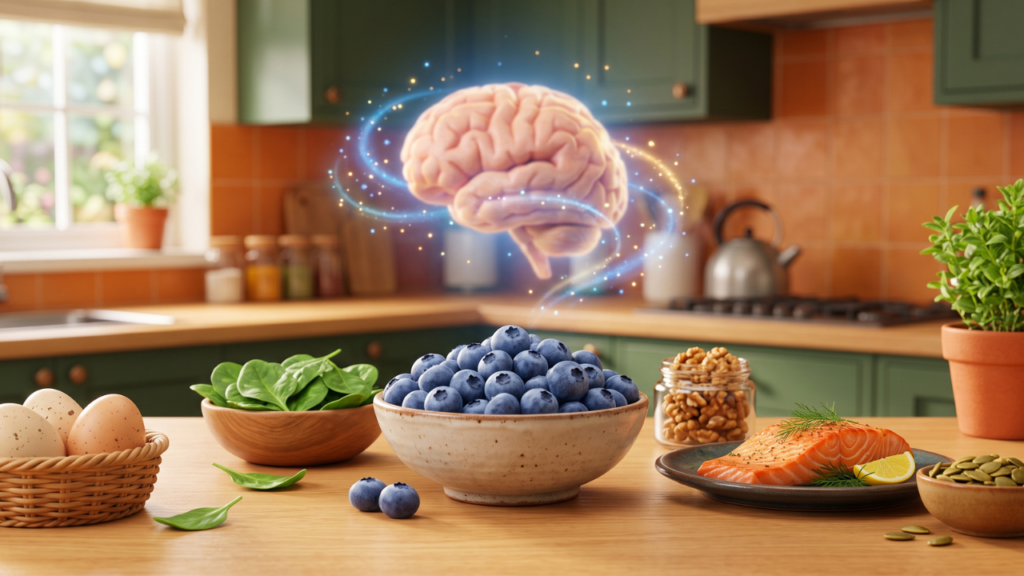
You sat down to get something done. Now it’s 20 minutes later, you’ve reread the same line three times, and your brain just… isn’t cooperating.
That foggy, sluggish, can’t-hold-a-thought feeling has a name: brain fog. And while stress and poor sleep often take the blame, one of the most overlooked causes is hiding in your diet. Knowing the right vitamins for brain fog could be the missing piece you’ve been searching for.
The good news? These deficiencies are fixable. With food.
How Nutritional Deficiencies Fog Your Brain
Your brain is the most metabolically active organ in your body. It runs on oxygen, chemical signals, and raw materials it can only get from what you eat.
When those raw materials run low, everything slows down. Thought processing, memory retrieval, focus, mood regulation. The whole system takes a hit.
Three specific nutrients are the biggest culprits behind nutritional brain fog: Vitamin B12, Vitamin D, and Iron. Here’s what each one actually does inside your skull — and what to eat when you’re running low.
Vitamin B12: Your Brain’s Electrical Insulation
What It Does Neurologically
Vitamin B12 builds and maintains myelin, the protective coating wrapped around your nerve fibers. Myelin works exactly like the insulation on electrical wiring. Without it, signals slow down, misfire, or don’t arrive at all.
B12 is also essential for producing serotonin and dopamine — two neurotransmitters directly tied to focus, mood, and motivation. According to Mayo Clinic, even a mild B12 deficiency can produce noticeable cognitive symptoms before other signs appear.
People most at risk: plant-based eaters, those on metformin, and anyone over 50 (absorption drops significantly with age).
Best Foods for Vitamin B12
- Beef liver — one of the most concentrated natural B12 sources available
- Eggs — especially the yolk
- Sardines — affordable, widely available, and packed with B12
- Lean beef — a reliable everyday source
- Fortified nutritional yeast — the go-to plant-based option
Vitamin D: The Hormone Disguised as a Vitamin
What It Does for Cognitive Clarity
Vitamin D behaves more like a hormone than a classic vitamin. Receptors for it exist throughout the brain, including in areas responsible for memory and attention.
It regulates the production of nerve growth factor, a protein your brain uses to maintain and repair neurons. It also controls neuroinflammation — and chronic low-grade brain inflammation is one of the leading biological explanations for persistent brain fog.
Low vitamin D is also strongly associated with depressive symptoms, poor attention span, and slower cognitive processing. This is especially relevant if you’re also experiencing nutrient deficiencies causing fatigue alongside your brain fog — the two very often share the same root cause.
Living in a northern climate makes this worse. Long winters, overcast skies, and months spent indoors are enough to drive vitamin D levels into deficiency territory for a significant portion of the population — even people who think they’re getting enough sun.
Best Foods for Vitamin D
- Salmon — one serving covers a substantial portion of your daily needs
- Canned sardines in oil — budget-friendly and genuinely effective
- Egg yolks — particularly from free-range eggs
- Sunlight-exposed mushrooms — place them cap-side down in direct sun for 20 minutes before cooking
- Fortified milk or plant-based milk — a simple, consistent daily addition

Iron: The Oxygen Delivery System
What It Does for Brain Function
Your brain consumes roughly 20% of your body’s entire oxygen supply. Iron is the mineral that makes that delivery happen. It’s central to hemoglobin, the protein in red blood cells that carries oxygen from your lungs to every organ — including your brain.
When iron is low, your brain runs on reduced oxygen. The result is slower thinking, shorter attention span, and that heavy dragging sensation that sleep doesn’t fix. Research through the National Institutes of Health confirms that iron-deficiency anemia is among the most common nutritional contributors to impaired cognitive function globally.
Iron also participates in synthesizing dopamine and serotonin. Low iron doesn’t just make you foggy — it can flatten your motivation and emotional baseline at the same time.
Women of reproductive age are at highest risk. So are vegetarians and anyone who rarely eats red meat.
Best Foods for Iron
- Spinach and dark leafy greens — versatile, widely available, and iron-rich
- Beef and chicken liver — hits iron and B12 simultaneously in one serving
- Lentils — one of the best plant-based iron sources, easy to cook in bulk
- Firm tofu — a solid plant-based option with decent iron content
- Pumpkin seeds — easy to add to salads, oatmeal, or snacks
Absorption tip: Always pair plant-based iron sources with a vitamin C food — orange juice, bell peppers, or tomatoes. It can dramatically increase how much iron your body actually absorbs.

Your 3-Day Cognitive Reset Blueprint
This isn’t a strict diet. It’s a starting point — a way to flood your system with what it’s been missing and prove to yourself that the pattern is sustainable.
Day 1: Foundation
Breakfast: Two scrambled eggs with sauteed spinach and a glass of orange juice. Covers B12, Vitamin D, and iron absorption in one plate.
Lunch: Grilled chicken liver with roasted sweet potato and steamed broccoli. One of the most nutrient-dense meals you can put together.
Dinner: Sardine pasta with garlic, olive oil, and cherry tomatoes. Sardines bring Vitamin D and B12 together in a quick, satisfying format.
Snack: A small handful of pumpkin seeds with a piece of fresh fruit.
Day 2: Add Variety
Breakfast: Rolled oats topped with a sprinkle of fortified nutritional yeast and a boiled egg on the side. Unusual combination — genuinely effective.
Lunch: Lentil soup with a squeeze of lemon and crusty whole grain bread. High in iron, high in folate, deeply satisfying.
Dinner: Chicken and tofu stir-fry with spinach and ginger. Ginger supports circulation, which helps oxygen reach your brain more efficiently.
Snack: Plain yogurt with sliced orange — a simple B12 and vitamin C pairing.
Day 3: Lock In the Habit
Breakfast: Two eggs with sauteed mushrooms. Place the mushrooms cap-side down in direct sunlight for 20 minutes before cooking to naturally boost their Vitamin D content.
Lunch: Grilled salmon with brown rice and a fresh tomato and cucumber salad. Salmon is one of the most efficient brain-nutrient foods available.
Dinner: Beef and vegetable stew with lentils. Lean beef covers both iron and B12 in a single comforting bowl.
Daily habit to add: 15 to 20 minutes of morning sun exposure when weather allows. It won’t replace dietary Vitamin D on its own, but it contributes meaningfully over time.
After three days, the goal isn’t transformation. It’s momentum. You’re showing your brain that help is on the way.
One More Thing Worth Knowing
Nutrition is often the best starting point for brain fog — but it isn’t always the complete answer. Thyroid issues, sleep disorders, and other medical conditions can produce identical symptoms.
Before supplementing — especially with iron, which causes harm in excess — get blood work done. Ask your doctor to check serum ferritin, serum B12, and 25-hydroxyvitamin D. Those three numbers tell a very clear story.
Start with food. Build from there.
Frequently Asked Questions
It depends on how deficient you are and which nutrient is involved. Some people notice improvements in energy and clarity within 2 to 4 weeks of consistent dietary changes. More significant deficiencies can take 3 to 6 months for full recovery. Getting blood work first gives you a realistic timeline to work with.
Supplements can help, especially when testing confirms a deficiency. But food sources are generally better absorbed and come packaged with supporting nutrients that work together. Use supplements as a bridge, not a replacement — and always check with your doctor on dosing, especially for iron and fat-soluble vitamins like D.
Not always. Brain fog can also stem from poor sleep, chronic stress, thyroid dysfunction, dehydration, or blood sugar fluctuations. Nutritional deficiency is one of the most common and most fixable causes, which is why it’s worth investigating first — but it’s rarely the only possibility.
Vitamin B12 tends to produce the most pronounced neurological symptoms — memory problems, slow thinking, difficulty concentrating — because of its direct role in nerve function and neurotransmitter production. That said, combined deficiencies tend to stack and compound each other significantly.
You don’t need perfection—you need consistency. Rotating through these foods throughout the week, rather than forcing them daily, is a realistic and effective approach. Focus on hitting each key nutrient at least a few times a week, then build from there.
The Bottom Line
Brain fog is frustrating, but it is rarely random. Your brain is a high-demand organ that needs the right fuel to function, and when key nutrients run low, thinking clearly becomes genuinely hard. Vitamin B12, Vitamin D, and Iron are three of the most common and most fixable nutritional gaps behind poor focus and mental fatigue. Start with real food, get your levels tested, and give your body a few weeks of consistent nourishment before expecting results. The difference between a foggy brain and a sharp one is often a lot simpler than people think.