
That tight, uncomfortable, nothing-fits feeling after a meal. You ate normally. You didn’t overdo it. And yet your stomach looks and feels like it’s staging a protest.
Chronic bloating is one of the most common digestive complaints out there, and one of the most misunderstood. Most people assume it’s just something they have to live with. It isn’t. Adding the right fermented foods for gut health to your daily routine can genuinely shift how your digestive system functions, not just mask the symptoms.
Here’s what’s actually going on inside your gut, and how to fix it with food.
What’s Really Happening in Your Gut
The Gut Microbiome Explained
Your gut is home to trillions of microorganisms. Bacteria, fungi, and other microbes live there collectively as the gut microbiome. This isn’t a bad thing. These microbes are essential. They help digest food, regulate immune response, produce certain vitamins, and keep inflammation in check.
When the balance tips, with too many harmful bacteria and not enough beneficial ones, the whole system gets noisy. Bloating, gas, irregular digestion, and even mood shifts can all trace back to a disrupted microbiome. According to Harvard Health, the diversity and balance of gut bacteria directly affects digestion, immunity, and overall wellbeing.
The good news is that your microbiome responds to what you feed it. Quickly.
Prebiotics vs. Probiotics: What’s the Difference?
These two terms get used interchangeably all the time. They are not the same thing.
Probiotics are live beneficial bacteria. You consume them through fermented foods or supplements, and they go to work populating your gut with good microbes. Prebiotics are the fiber-rich food that feeds those bacteria. Think of probiotics as the seeds and prebiotics as the soil.
You need both. Probiotics without prebiotics is like planting seeds in dry, depleted ground. They won’t thrive. If you want to go deeper on how these two work together and where postbiotics fit in, the prebiotics vs. probiotics breakdown covers it in full detail.
How Live Cultures Actually Reduce Bloating
When harmful bacteria dominate the gut, they ferment food in ways that produce excess gas. That gas gets trapped. That’s your bloating.
Live active cultures (the probiotics found in fermented foods) compete with harmful bacteria for space and resources. Over time, they help restore balance, reduce fermentation byproducts, strengthen the intestinal lining, and lower gut inflammation. Mayo Clinic notes that certain strains of probiotics have demonstrated measurable benefits for reducing bloating and improving gut transit time.
It doesn’t happen overnight. But it does happen.
The Best Fermented Foods to Add to Your Diet
Yogurt and Kefir
Yogurt is the most accessible entry point into fermented eating. It’s widely available, familiar, and easy to work into breakfast or snacks. Kefir is essentially drinkable yogurt, fermented longer, thinner in consistency, and generally higher in probiotic strains.
Both contain live active cultures that survive digestion and reach the gut where they’re needed. Kefir in particular has been studied for its effect on lactose digestion, bloating, and gut transit speed.
What to Look for on the Label
- “Live and active cultures” stamp. Without it, the probiotics may not survive processing.
- Named strains like Lactobacillus acidophilus, L. bulgaricus, or Bifidobacterium. Vague “cultures” listings are less reliable.
- No added sugar or minimal sugar. Excess sugar feeds harmful bacteria and undoes the benefit.
- Whole milk or low-fat options. Both work. Avoid fat-free versions that often compensate with extra additives.
- Short ingredient list. The fewer the fillers, the better.
Plain yogurt also pairs well as a base for a green power smoothie, a simple way to combine probiotics with prebiotic fiber from fruit and greens in one meal.
Kimchi and Sauerkraut
Both are fermented vegetables loaded with beneficial bacteria produced through lacto-fermentation, a process that uses salt and time, with no vinegar required. Kimchi is spiced and bold. Sauerkraut is milder. Either way, the probiotic content is significant.
They’re also rich in fiber, which acts as a prebiotic to feed the bacteria you’re introducing. It’s a two-for-one effect, probiotics and prebiotics in a single ingredient.
What to Look for on the Label
- “Raw” or “naturally fermented” on the packaging. This signals live cultures are present.
- Refrigerated section. Shelf-stable jarred versions have usually been heat-treated, which kills the live cultures.
- Short ingredient list. Cabbage, salt, spices. Nothing more needed.
- No vinegar in sauerkraut. Vinegar-based versions are pickled, not fermented. They contain no live cultures.
- “Unpasteurized” where listed. Pasteurization kills beneficial bacteria.
A small side of sauerkraut alongside crispy black bean tacos is an easy, low-effort way to sneak fermented food into a meal you’re already making.
Kombucha
Kombucha is fermented tea. It’s tangy, lightly fizzy, and has built a devoted following for good reason. The fermentation process produces beneficial bacteria, organic acids, and B vitamins that support gut lining integrity and microbial balance.
It also tends to be better tolerated by people who struggle with dairy-based fermented foods. That makes it a useful entry point for anyone who can’t do yogurt or kefir.
What to Look for on the Label
- “Raw” or “naturally fermented.” Same rule as kimchi. You want live cultures intact.
- Low sugar content. Some commercial kombucha brands add significant sugar post-fermentation. Aim for under 8g per serving.
- “Contains live cultures” or similar language on the label.
- Small SCOBY sediment at the bottom of the bottle. This is normal and actually a good sign of an active, living product.
- Refrigerated. Shelf-stable kombucha has typically been processed in ways that reduce live culture content.
Start with a small serving (around 120ml or 4oz) if you’re new to it. Too much too soon can temporarily increase bloating as your gut adjusts.
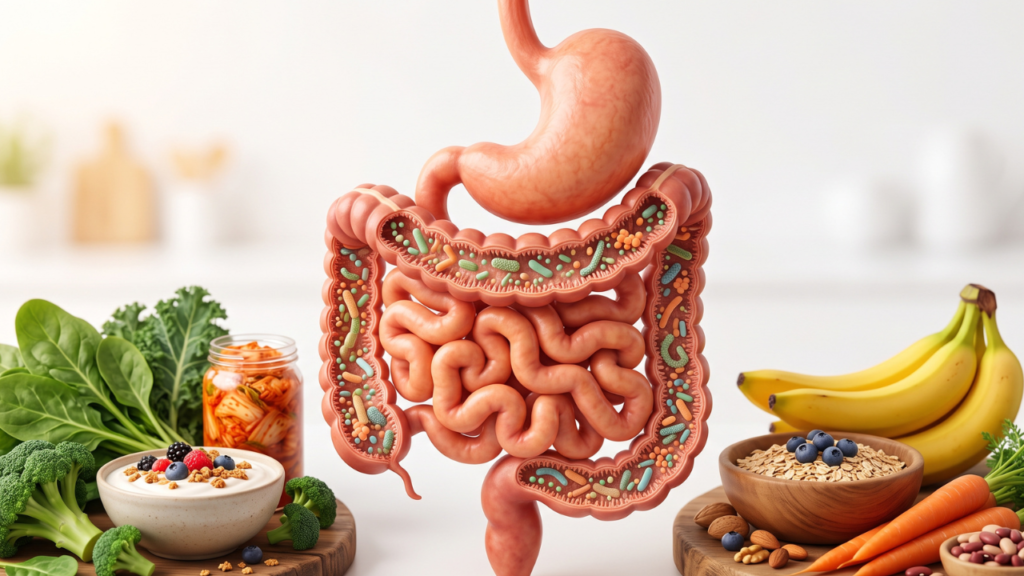
Your Beginner Gut Reset: A Simple Daily Schedule
You don’t need to overhaul your entire diet at once. This schedule is designed for someone starting from zero, one small addition at a time, building a habit that actually sticks.
Morning
Start the day with 150 to 200ml of plain kefir or a small serving of yogurt with live cultures. Add a piece of fruit or some oats on the side for prebiotic fiber. This sets the probiotic tone for the day before anything else gets in the way.
Mid-Morning
If you make a smoothie, blend in a handful of spinach or kale alongside your fruit. Greens are prebiotic-rich and feed the bacteria you introduced at breakfast. A green power smoothie doesn’t need to be complicated to be effective.
Lunch
Add a small portion of kimchi or sauerkraut as a side to whatever you’re already eating. Two to three tablespoons is enough. You’re not trying to eat a bowl of it. You’re building a consistent habit.
Afternoon
If you want something to sip, reach for a small kombucha instead of a soft drink. Keep it to one serving, especially in the first week.
Dinner
Build a meal around a plant-based protein like lentils or black beans. These are high in prebiotic fiber and pair beautifully with fermented sides. Crispy black bean tacos with a spoonful of sauerkraut on top check every box: probiotics, prebiotics, and a genuinely satisfying meal.
Evening
Give your gut a rest after dinner. Avoid heavy snacking late at night. Your digestive system does repair work while you sleep, and it works better without a backlog to deal with.
A realistic expectation: most people notice a meaningful shift in bloating and digestive comfort within 2 to 4 weeks of consistent fermented food intake. Some notice it sooner. Stick with it.

A quick but important note. If your bloating is severe, persistent, or accompanied by pain, blood, or significant weight changes, please see a doctor before making dietary changes. Fermented foods are powerful gut support tools but they are not a substitute for medical evaluation when something more serious might be going on.
For everyday bloating, sluggish digestion, and a microbiome that needs rebuilding? Food is an excellent place to start.
Frequently Asked Questions
Yes, temporarily. When you introduce large amounts of probiotics quickly, your gut microbiome goes through an adjustment period. Some people experience increased gas or bloating in the first week. Start with small servings and increase gradually. This usually resolves within 7 to 10 days.
You don’t need a lot. A serving of yogurt, a few tablespoons of kimchi or sauerkraut, or a small kombucha is enough to make a difference when consumed consistently. Daily consistency matters more than quantity.
Supplements can be useful, especially for specific strains at therapeutic doses. But fermented foods come packaged with fiber, vitamins, and supporting compounds that supplements don’t replicate. Whole food sources are generally the better starting point.
No. Heat-treated or heavily processed yogurt may contain little to no live cultures. Always look for the “live and active cultures” stamp and check that named bacterial strains appear in the ingredient list.
Most people notice digestive improvements within 2 to 4 weeks of daily consumption. Significant microbiome shifts can take longer. Some research suggests 6 to 8 weeks for measurable changes in gut bacteria diversity. Patience and consistency are the two things that matter most.
The Bottom Line
Bloating is not something you just have to accept. Your gut microbiome is dynamic and responsive, and the right fermented foods give it exactly what it needs to rebalance. Yogurt, kefir, kimchi, sauerkraut, and kombucha are not health trends. They are some of the oldest, most studied tools for digestive health available. Pick one, start small, stay consistent, and pay attention to how your body responds over the next few weeks. Most people are surprised by how much better they feel once their gut finally gets the support it has been asking for.