Most people assume food poisoning comes from dodgy takeout or a questionable buffet. The truth is less convenient. The most common food safety mistakes at home happen in your own kitchen, during habits you have probably been doing for years, without any sign that something is wrong, until someone gets sick.
According to the CDC, roughly 48 million Americans get sick from foodborne illness each year, leading to 128,000 hospitalizations and 3,000 deaths. Most of those cases are preventable. And a significant share traces back to home kitchens.
Here are the five mistakes that show up most often, and exactly what to do differently.
Mistake 1: Washing Raw Chicken Before Cooking It
This one feels counterintuitive because washing things makes them feel clean. It is not. When you rinse raw chicken under the tap, water droplets carrying Salmonella and Campylobacter splash outward up to 50 centimeters in every direction, landing on countertops, utensils, nearby produce, and your hands.
A USDA observational study found that 60 percent of participants who washed raw poultry had bacteria in their sink afterward. Even more alarming: 26 percent of those who washed their chicken transferred bacteria directly onto their ready-to-eat salad. As the USDA Food Safety confirms, washing raw poultry before cooking is not recommended because bacteria in the juices can spread to other surfaces through cross-contamination.
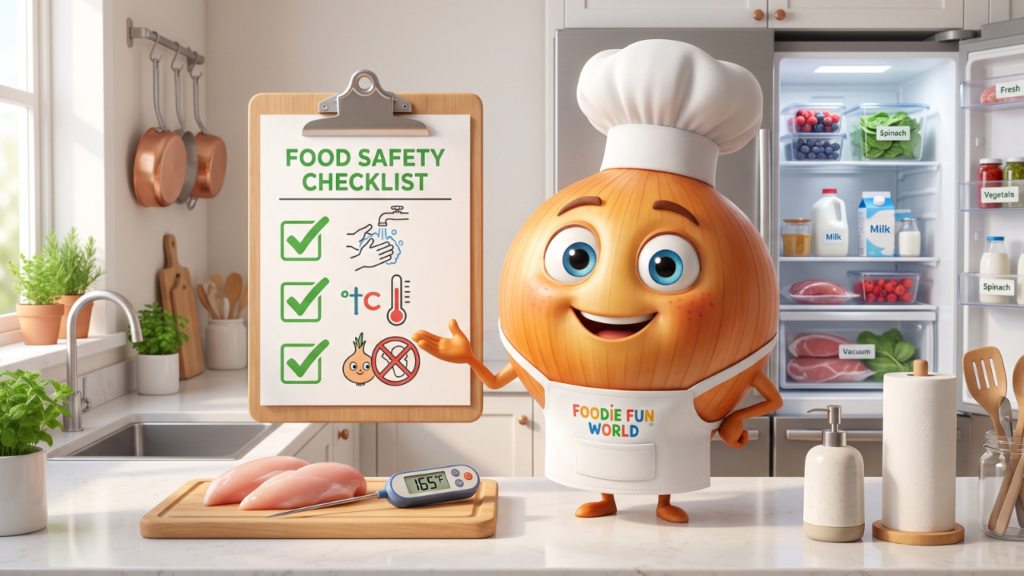
What to do instead: Put the chicken straight from the package into the pan or onto the grill. Cooking to an internal temperature of 165°F kills every pathogen present. That is the only step that actually makes raw chicken safe.
Mistake 2: Using One Cutting Board for Everything
This is one of the most widespread food safety mistakes at home, and one of the easiest to fix. Using the same cutting board for raw meat and then vegetables or bread means bacteria from the raw meat transfer directly onto food that will not be cooked again before eating.
Cross-contamination does not require anything dramatic. It just requires the same surface, the same knife, and a few minutes between tasks. Juices from raw chicken left on a board can survive long enough to contaminate the next thing you chop.
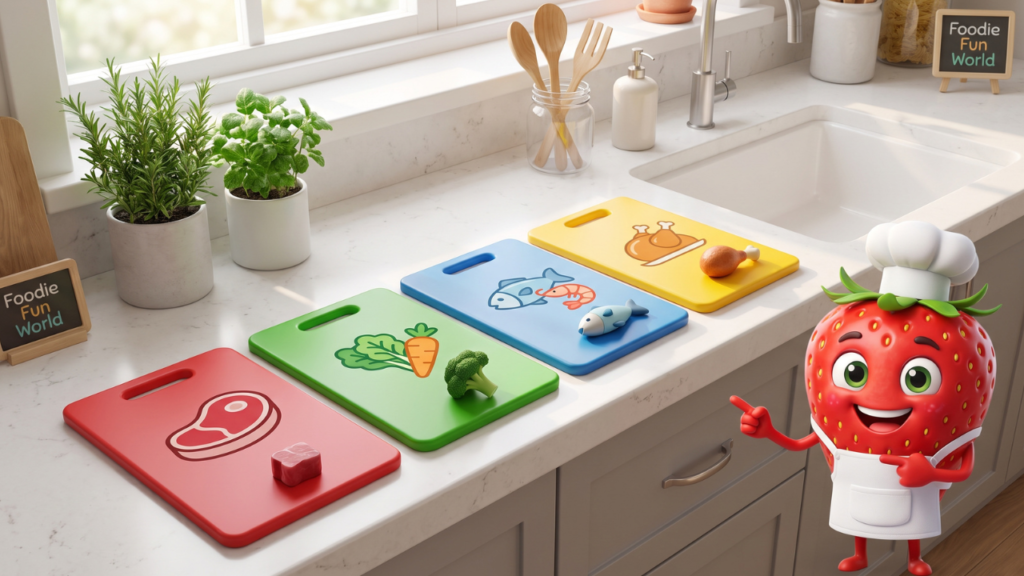
What to do instead: Use separate cutting boards for raw meat and poultry, ready-to-eat foods like vegetables and bread, and seafood. Color-coded boards make this effortless. Wash all boards in hot, soapy water after contact with raw protein, and replace boards with deep grooves where bacteria can hide.
Mistake 3: Leaving Food Out Too Long at Room Temperature
You finish cooking, sit down to eat, have a long conversation, and two hours pass before leftovers make it into the fridge. This is one of the most common and most underestimated food safety mistakes at home.
Bacteria multiply fastest between 40°F and 140°F, a range that food safety authorities call the danger zone. As USDA FSIS explains, bacteria can double in number in as little as 20 minutes in this temperature range. Food left out for more than two hours at room temperature enters genuinely dangerous territory, and you cannot tell by smell or appearance alone.
What to do instead: Set a timer when you sit down to eat. Leftovers go into the fridge within two hours, in shallow containers that allow heat to escape quickly. If the room is warmer than 90°F, cut that window to one hour.
Mistake 4: Judging Meat Doneness by Color Instead of Temperature
Pink means undercooked, right? Not always. Meat color is influenced by age, packaging gases, cooking method, and the presence of myoglobin, none of which are reliably related to internal temperature. Burgers can turn brown before reaching a safe temperature. Poultry can appear white even when it’s still undercooked in the center.
This is a genuinely dangerous assumption. Ground beef needs to reach 160°F to kill E. coli. Poultry needs 165°F. Whole cuts of pork and beef need at least 145°F with a three-minute rest. Color tells you nothing reliable about whether any of those thresholds have been reached.
What to do instead: Own a meat thermometer and use it every time. Insert it into the thickest part of the meat, away from the bone and fat. It takes ten seconds and removes all the guesswork.
Mistake 5: Thawing Meat on the Kitchen Counter
Leaving a frozen chicken breast or a pack of ground beef on the counter to thaw throughout the day seems practical. It is not safe. As the outer layer of meat thaws and warms up, it enters the temperature danger zone while the center is still frozen. Bacteria on the surface start multiplying long before the meat is fully thawed.
By the time the meat looks ready to cook, the outer layer may have been sitting in the danger zone for hours.
What to do instead: There are three safe thawing methods. In the refrigerator overnight, which is the safest and requires no monitoring. In cold water, submerged in a leak-proof bag and changed every 30 minutes, which thaws most cuts within a few hours. Or in the microwave using the defrost setting, but only if you are cooking the meat immediately after. Counter thawing is never recommended, regardless of how common it is.
Your Kitchen Safety Checklist
Keep this somewhere visible:
Before cooking:
- Wash your hands with soap and water for at least 20 seconds
- Separate raw meat from everything else from the moment you buy it
- Use dedicated cutting boards for raw protein
While cooking:
- Use a meat thermometer every time; never rely on color
- Keep hot food above 140°F and cold food below 40°F
After cooking:
- Refrigerate leftovers within two hours
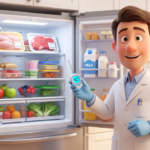
- Store raw meat on the bottom shelf of the fridge so juices cannot drip onto other food
- Sanitize any surface that contacted raw meat, not just rinse it
Frequently Asked Questions
No more than two hours at room temperature, or one hour if the environment is warmer than 90°F. After that, bacteria may have multiplied to levels that cause illness even if the food looks and smells fine.
It depends on how it was thawed. Meat thawed in the refrigerator can safely be refrozen without cooking first. Meat thawed in cold water or the microwave should be cooked before refreezing. Meat thawed on the counter should not be refrozen and is best discarded if left out for more than two hours.
No. Wiping a knife does not remove bacteria. Only washing with hot, soapy water or properly running it through a dishwasher cycle removes the risk. Wipe-downs between uses spread contamination rather than eliminating it.
Yes. Rinse produce under cold running water before eating, cutting, or cooking, even if you plan to peel it. Bacteria from the outer surface can transfer to the inner flesh when you cut through.
Use a refrigerator thermometer. The temperature should sit at or below 40°F. Most refrigerators lack accurate built-in displays, and the temperature can vary significantly between the door shelves and the back of the unit.
The Bottom Line
None of these fixes requires expensive equipment or a complete kitchen overhaul. A meat thermometer, a second cutting board, and the two-hour rule for leftovers will eliminate most home food safety risks immediately. Start with whichever mistake you recognized first in this list and work from there.