

That moment when smoke starts rising from the oven, and you realize you’ve been ignoring it for way too long, we’ve all been there. Oven cleaning gets pushed to the bottom of the list until it absolutely cannot wait anymore.
Here’s the thing most people don’t know: you don’t need expensive sprays or aggressive chemicals to get a clean oven. The same science behind how food cooks explains exactly why certain everyday ingredients cut through grease and baked-on residue so well. Once you understand the logic, cleaning becomes a lot less frustrating.
Here are 5 oven-cleaning hacks that actually work, step-by-step instructions, and the science behind why each one works.
1. Baking Soda and Vinegar Paste
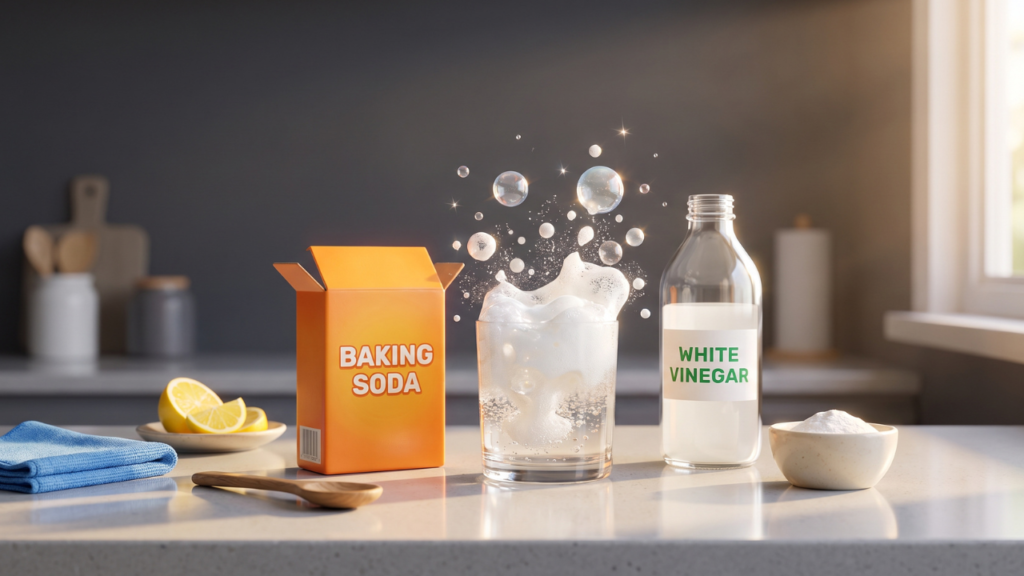
The hack: Mix baking soda with just enough water to make a thick paste. Spread it over the dirty surfaces inside your oven, avoiding the heating elements. Leave it overnight or for at least 12 hours, then wipe it off with a damp cloth. Spray white vinegar over any remaining residue and wipe again.
Why it works: Baking soda is a mild alkali. Grease and burnt food residue are mostly acidic compounds. When an alkali meets an acid, a reaction called neutralization breaks the bonds that hold grime to the surface, softening it enough to wipe away without aggressive scrubbing. The American Chemical Society explains that this acid-base neutralization is the same principle behind antacids that relieve stomach acid, making it one of the most practical chemical reactions in everyday life.
The vinegar step adds a second layer. When vinegar (a mild acid) meets leftover baking soda, it fizzes and lifts the loosened residue. That bubbling is carbon dioxide being released, and the mechanical action does the work so you don’t have to.
The result: Baked-on grease and dark stains lift away with minimal effort. This method is completely food-safe, which matters a lot in a space where you cook every day.
2. Steam Cleaning With Just Water
The hack: Pour about half a cup of water into an oven-safe bowl or baking dish. Place it on the bottom rack and heat the oven to around 250°F (120°C) for 20 to 30 minutes. Turn the oven off, let it cool until safe to touch, then wipe down the interior with a cloth or sponge.
Why it works: Heat turns the water into steam, which fills the oven cavity. Steam works on baked-on food the same way it works in cooking — it penetrates and rehydrates dried, hardened residue. Burnt food and grease bond tightly to oven surfaces when dry. Steam softens those bonds by reintroducing moisture at a temperature high enough to loosen the residue’s structure.
Once softened, the grime wipes away far more easily than it would when dry. No products needed at all.
The result: This method works best for light to moderate buildup. It’s ideal for regular maintenance between deeper sessions and takes almost no effort to set up.
3. Dish Soap and Boiling Water for Oven Racks
The hack: Remove your oven racks and place them in a bathtub or large utility sink. Fill with hot water, add a generous squirt of dish soap, and let them soak for at least 4 hours or overnight. Scrub with a non-scratch scourer and rinse clean.
Why it works: Dish soap contains surfactants, molecules with a split personality. One end is attracted to water, the other to grease. As the American Cleaning Institute explains, when surfactants encounter greasy surfaces, they surround grease particles and form tiny structures called micelles, allowing the grease to lift off and be rinsed away with water.
Soaking time matters here. Giving the surfactants several hours to work means they fully penetrate the baked-on layers, which cuts scrubbing effort dramatically.
The result: Even heavily soiled oven racks come clean with far less effort than dry scrubbing. The longer the soak, the easier the clean.

4. Lemon Steam for Odor and Light Grease
The hack: Cut two lemons in half and squeeze the juice into an oven-safe bowl. Drop the squeezed lemon halves in too and add water until the bowl is about a third full. Place it in the oven at 250°F (120°C) for 30 minutes. Let the oven cool, then wipe down the interior.
Why it works: Lemon juice contains citric acid, a natural degreaser. When heated, citric acid releases into the steam and comes into contact with grease and food residue on the oven walls. Acids break down the fatty compounds in grease by disrupting the chemical bonds that hold them together, making residue much easier to wipe away.
There’s an odor benefit too. Burnt food leaves behind compounds that produce unpleasant smells when the oven heats up again. Citric acid reacts with and neutralizes many of these odor-causing compounds, leaving the oven smelling noticeably cleaner without any artificial fragrance.
The result: This method works best for light grease and odor rather than heavy buildup. It’s an easy regular refresh between deeper cleans and one of the most pleasant-smelling hacks on this list.
5. Salt for Fresh Spills
The hack: As soon as something spills or overflows in the oven while it’s still hot, pour a generous amount of table salt directly onto the spill. Leave it while the oven finishes cooking or as it cools. Once cool, the salted residue lifts off easily with a dry cloth or spatula.
Why it works: Fresh spills are still semi-liquid and haven’t fully bonded to the oven surface yet. Salt is highly absorbent and draws moisture out of the spill through osmosis, a process where water moves toward a higher concentration of dissolved particles. As the salt absorbs the liquid, it prevents the sugars and fats from fully caramelizing and hardening onto the oven floor, which is exactly what makes baked-on spills so difficult to remove later.
The salt essentially interrupts the baking process of the spill itself, keeping it loose and removable rather than letting it harden into the surface.
The result: Fresh spills that would otherwise turn into rock-hard, burnt patches come away cleanly with almost no effort. This might be the most effective preventative hack in the kitchen, and it takes about five seconds.

A Quick Note on Commercial Oven Cleaners
Commercial oven cleaners work quickly, but most contain strong alkalis such as sodium hydroxide, which can cause serious problems if not handled carefully. According to ReAgent Chemicals, sodium hydroxide can irritate the skin, eyes, and airways, and the chemical residue left behind needs thorough rinsing before the oven is safe to use for food again.
The methods above use ingredients already in most kitchens, are safe around food surfaces, and are just as effective for regular maintenance. For extremely neglected ovens with years of heavy buildup, a commercial cleaner used carefully and according to its instructions may still be the most practical option.
Frequently Asked Questions
A light wipe-down after heavy use and a deeper clean every one to three months is a reasonable routine for most households. The more regularly you do it, the less effort each session takes.
The steam and salt methods are generally safe for self-cleaning ovens. Avoid using baking soda paste near the door seal or rubber components, as it can cause deterioration over time. Always check your oven manual for specific guidance before trying any method.
Yes. White vinegar is food-safe and non-toxic. Once the oven is wiped clean and aired out, any vinegar residue evaporates completely and won’t affect taste or smell when the oven heats again.
Residue inside the oven vents or around the heating elements can cause smells even when the main cavity looks clean. Running the oven empty at a low temperature for 15 to 20 minutes after cleaning helps burn off any remaining residue and clears the smell.
Some oven racks are dishwasher safe but many are not, and repeated dishwasher cycles can dull or rust the finish. The soak method in a bathtub is gentler and just as effective for most racks.
The Bottom Line
A clean oven isn’t just about appearances. Burnt residue and grease buildup affect how evenly your oven heats and can change the flavor of everything you cook inside it. The five methods here cover everything from fresh spills to deep cleaning, using ingredients most people already have at home. Pick whichever one matches your oven’s current state and start there.