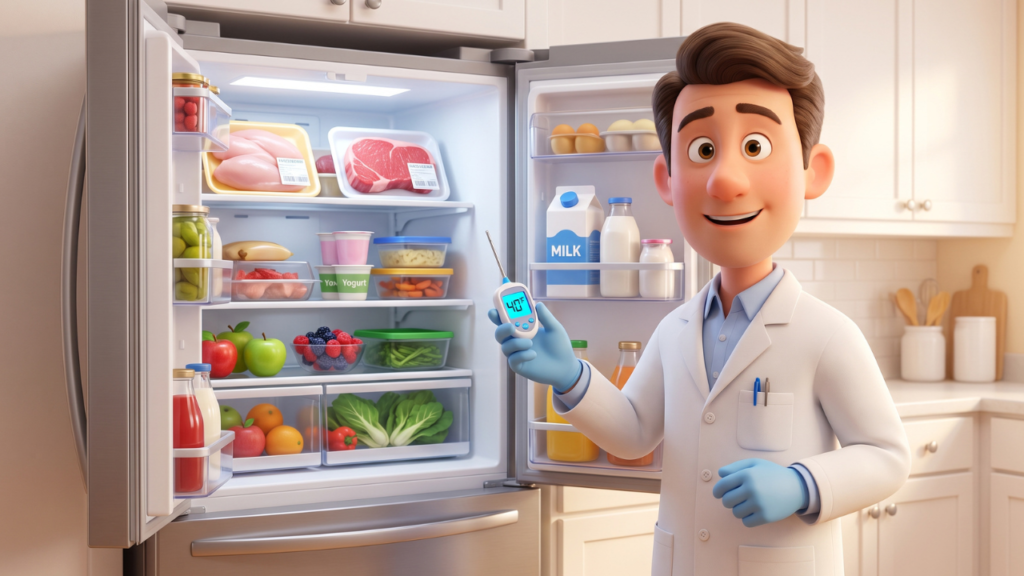
You open the fridge, pull out a container, and stand there doing the math. Three days? Four? It smells okay, but is that enough? This is a question about how long does food last that most people answer with a guess and a shrug.
The problem with guessing is that the bacteria most likely to make you sick, Salmonella, Listeria, E. coli, produce no smell, no visible slime, no obvious warning signs. They grow silently in food that looks and smells perfectly fine. Understanding food safety mistakes at home is one piece of the puzzle. Knowing the actual science-backed timelines for every category of food is the other piece.
Here are the real numbers, backed by food science, not guesswork.
The Refrigerator: Where Most Confusion Lives
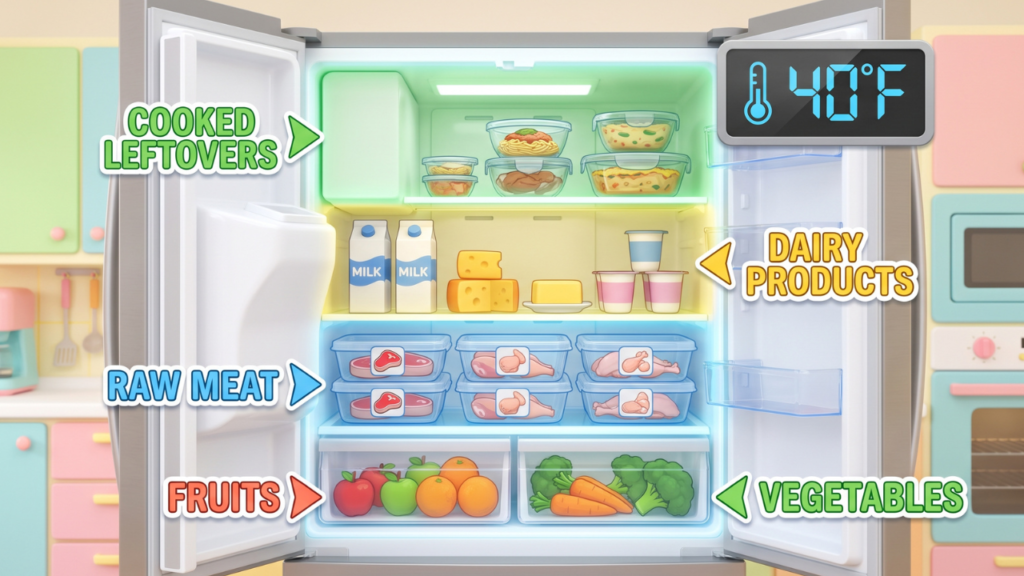
Most people set their fridge temperature somewhere between “cold enough” and “not quite frozen” without ever checking the actual number. Your refrigerator should be at or below 40°F at all times. Above that, you are already entering bacterial growth territory.
Raw Meat and Poultry
Raw chicken, turkey, and ground meat are the most time-sensitive items in your fridge. They last just one to two days after purchase, regardless of what the sell-by date says. Whole cuts of beef, pork, lamb, and veal last three to five days. This is not a conservative estimate. It is the threshold beyond which bacterial load becomes genuinely risky. According to FoodSafety.gov, these timelines are for refrigerators held consistently at 40°F or below. If your fridge runs warmer, shorten every timeline accordingly.
Cooked Leftovers
The four-day rule is the most important number in your fridge. Cooked meat, poultry, casseroles, soups, stews, and most prepared foods are safe for three to four days in the refrigerator, then they need to be thrown out. Not five days. Not “it still smells fine on day six.” Four days is the scientifically established window beyond which pathogen risk rises significantly. Store leftovers in shallow airtight containers so they cool quickly and evenly, and always label them with the date.
Dairy and Eggs
Milk typically lasts five to seven days past the date on the carton when stored properly in the back of the fridge, not the door, where temperatures fluctuate most. Hard cheeses like cheddar and parmesan last three to four weeks once opened. Soft cheeses like ricotta, brie, and cottage cheese last only one to two weeks. Raw eggs in their shells are good for 3 to 5 weeks after purchase. Do not freeze raw eggs in shells. They will crack.
The Freezer: Your Best Tool Against Food Waste
The freezer is genuinely underused as a food safety tool. At 0°F or below, bacterial growth stops entirely. Freezing does not kill bacteria, it suspends them. But it keeps food safe for far longer than most people realize.
How Long Frozen Foods Actually Last
Raw chicken pieces last nine months to a year in the freezer. Whole chickens last up to a year. Ground meat is best used within three to four months. Beef steaks and roasts hold quality for six to twelve months. Cooked leftovers maintain quality for two to six months, and are safe beyond that but may develop freezer burn and texture changes. Bread and baked goods freeze well for two to three months. As USDA Food Safety confirms, frozen foods stored continuously at 0°F are safe indefinitely. The timelines above are for quality, not safety.
What Does Not Freeze Well
Some foods change texture dramatically when frozen and thawed. Raw eggs in shells will crack. Mayonnaise and cream-based sauces separate into an unpleasant oily mess. Soft cheeses like ricotta become grainy. Cooked pasta and potatoes turn mushy. Lettuce and cucumbers become limp and watery. None of these are unsafe after freezing. They are just unpleasant enough that most people throw them away anyway.
The Pantry: Longer Than You Think, Shorter Than You Hope
Pantry storage gets less attention than fridge timelines, but the variation between products is enormous. Some pantry staples last years. Others degrade faster than most people realize.
Canned and Shelf-Stable Foods
Commercially canned foods are among the longest-lasting items in any kitchen. High-acid canned goods like tomatoes, citrus, and pineapple stay at good quality for twelve to eighteen months. Low-acid canned goods like beans, corn, tuna, and vegetables last two to five years. These timelines are for quality. A can in good condition with no rust, dents, or swelling is generally safe well beyond those dates, though flavor and texture will decline. Never use a can that is bulging, leaking, or has a foul smell when opened.
Dry Goods
White rice, dried pasta, and flour store well for one to two years in sealed containers in a cool, dry place. Whole grain products like brown rice and whole wheat flour have a shorter shelf life of three to six months because the natural oils in the bran go rancid. Honey is genuinely shelf-stable indefinitely when stored sealed. Pure vanilla extract and most other alcohol-based extracts last for years without refrigeration. Spices do not expire in any safety sense, but lose potency after one to three years.
Decoding Date Labels Once and for All
The confusion around date labels is significant and well-documented. According to the FDA, confusion over varying date labeling terms accounts for roughly 20 percent of food waste in the home. Here is what each one actually means.
Best if Used By or Best By: This is a quality date, not a safety date. The product will taste and perform best before this date. It does not mean the food is unsafe after this date unless it shows obvious signs of spoilage.
Sell By: This is a store inventory date. It tells the retailer how long to display the product. It is not a safe date for consumers. Food is often safe and good for days or weeks beyond the sell-by date if stored correctly.
Use By: This is the manufacturer’s estimate of peak quality. With the exception of infant formula, where it is a genuine safety date, this is still primarily a quality indicator rather than a hard safety cutoff.
Freeze By: Indicates when to move the product to the freezer to preserve quality. It has nothing to do with whether the food is currently safe in the fridge.
The only date that matters for safety is the Use By date on infant formula. For everything else, use your senses and these guidelines to make the call.
Frequently Asked Questions
No. The bacteria most associated with foodborne illness, including Listeria and certain strains of E. coli, produce no detectable odor. The four-day rule exists precisely because you cannot smell or see the danger. When in doubt, throw it out.
No. Freezing suspends bacterial activity but does not kill bacteria. When food thaws, any bacteria present become active again. This is why thawed food should be handled with the same care as fresh food and cooked promptly.
Yes, if it was thawed in the refrigerator. Meat thawed in the fridge can be safely refrozen before or after cooking. Meat thawed in cold water or the microwave should be cooked first before refreezing.
Pantry storage is optimal between 50°F and 70°F in a dark, dry space. Kitchens near ovens, dishwashers, or windows can run significantly warmer, which shortens the shelf life of everything stored there. A simple thermometer placed in the pantry area will tell you whether your conditions are suitable.
Spices do not expire in any safety sense. They lose potency over time, particularly ground spices after about one year. Whole spices like peppercorns and cinnamon sticks hold flavor longer. The easiest test is smell: if a spice has little to no detectable aroma, it will not do much for your cooking.
Your 3-Step Quick Freshness Check
When you are standing at the fridge door, unsure about something, run through this:
Step 1: Check the date and count the days. Cooked leftovers get four days maximum. Raw poultry and ground meat take 1 to 2 days. Everything else follows the timelines in this guide.
Step 2: Check the appearance. Look for visible mold, unusual discoloration, or changes in texture. Any of these is a discard signal regardless of the date.
Step 3: Check the smell. An off smell is a clear discard signal. But remember, no smell does not mean safe. If the date is past or you are genuinely uncertain after steps one and two, discard it.
When in doubt, throw it out. The cost of a discarded meal is always lower than the cost of a foodborne illness.